

Anyone who has lived a few streets back from Moreton Bay for a while already knows the pattern: outdoor fittings that would last a decade inland are corroded, pitted or dead within three or four years in Wynnum, Manly, Capalaba or Birkdale. Salt-laden air carried in off the bay settles on anything metal outside — and a split system’s outdoor unit, sitting outside year-round with a fan constantly pulling air across it, takes more of that than almost anything else on the property.
This is what salt air actually does to air conditioning equipment, why standard units struggle with it, and what changes when you fit and maintain a system properly for a bayside home.
What salt air does to an outdoor unit
- ✓Corrodes the aluminium fins on the condenser coil, which are wafer-thin and have the largest surface area of any part on the unit exposed to the air. Corroded fins lose heat-exchange efficiency, so the whole system works harder for the same cooling.
- ✓Attacks the fan motor and electrical terminals inside the outdoor unit, which is where a slow salt problem turns into a sudden failure — corrosion on a terminal or motor bearing doesn’t announce itself gradually, it just stops working.
- ✓Pits and rusts unprotected steel — mounting brackets, screws, the casing itself on a standard-grade unit — well before the refrigeration components inside actually fail.
- ✓Compounds with sea breeze wind-driven salt spray on properties directly exposed to onshore winds, which is a step beyond general coastal air and needs a step up in protection again.
None of this is unique to Moritz Electrical’s observation of the area — it’s the reason air conditioner manufacturers sell dedicated coastal or marine-grade models, and the reason those models cost more. The corrosion is real, it’s faster than people expect, and it’s specific to how close a property sits to the bay.
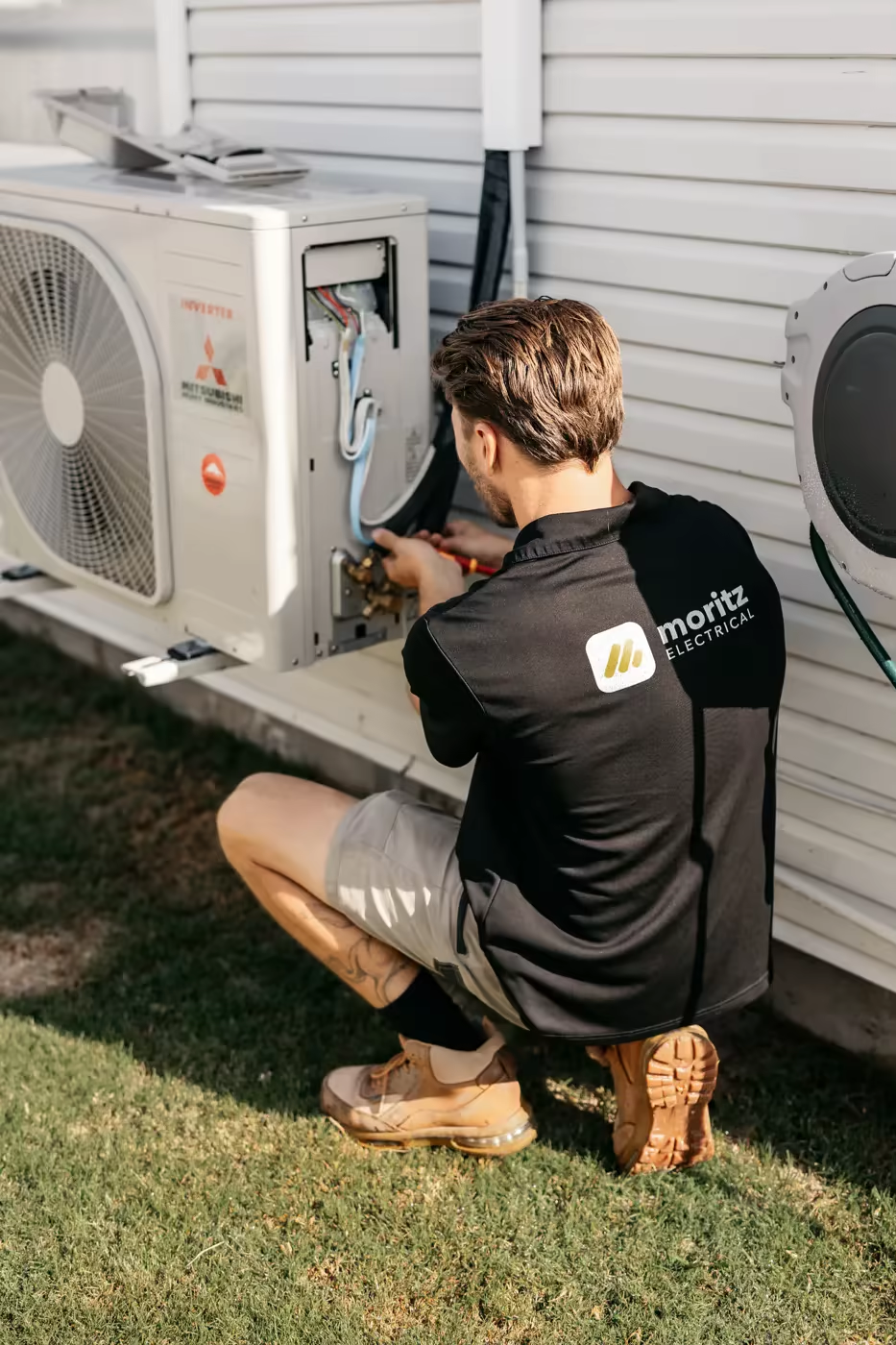
What we do differently for bayside installs
- 1Recommend coastal or marine-grade outdoor units where the property is close enough to the bay to warrant it — the coil coating and cabinet material are built for salt exposure, not just standard weather.
- 2Use stainless steel or coated fixings and brackets instead of standard zinc-plated hardware, which is one of the first things to rust visibly on an unprotected install.
- 3Position the outdoor unit to avoid direct onshore wind and salt spray where the site allows it, and orient it away from prevailing sea breeze rather than defaulting to whatever wall is closest to the indoor head.
- 4Seal external power points, isolator switches and any exposed electrical connections to a higher standard than an inland install needs.
- 5Flag switchboard and external circuit condition on older bayside homes, where the same corrosion affecting the AC unit is often affecting external wiring and fittings too.
Maintenance that actually matters near the water
A coastal AC unit isn’t maintenance-free just because it’s the right grade of equipment — it just buys you more time between problems, not none. A few things matter more here than they do further inland:
- ✓Rinse the outdoor unit with fresh water more often than an inland property needs to. A quick hose-down of the coil and casing every few weeks in summer washes off accumulated salt before it has time to pit the metal. This is separate from a full professional clean, which reaches the coil, fan barrel and internals a garden hose can’t.
- ✓Check fixings and brackets for early rust at each service, since fasteners tend to show corrosion before the coil does — it’s the cheap early warning sign.
- ✓Don’t box the unit in. Fencing, screens or garden beds that trap salt-laden air around the unit instead of letting it clear make the exposure worse, not better, even though the instinct is usually to hide the unit from the weather.
- ✓Service more frequently than the standard annual interval if the property is directly exposed to onshore wind — six-monthly picks up fixing and terminal corrosion before it becomes a failure.
It's not just the AC unit
Outdoor power points, external light fittings, weatherproof isolators and even an exposed switchboard corrode faster this close to the bay. If you're getting one thing checked, it’s worth having the electrician look at what else outside the house is showing the same wear.
Which suburbs this actually applies to
Salt exposure drops off with distance from the water, but it reaches further than most people expect on an onshore wind. We see it most in Wynnum and Manly right on the Esplanade, through Birkdale and Thorneside on the bay side, and it’s still a real factor further into Capalaba and the Redlands on exposed sites. If you can smell or taste salt air on a windy day at your place, it’s worth planning for.
Installing or servicing air conditioning near the bay? We’ll spec it for the location.