

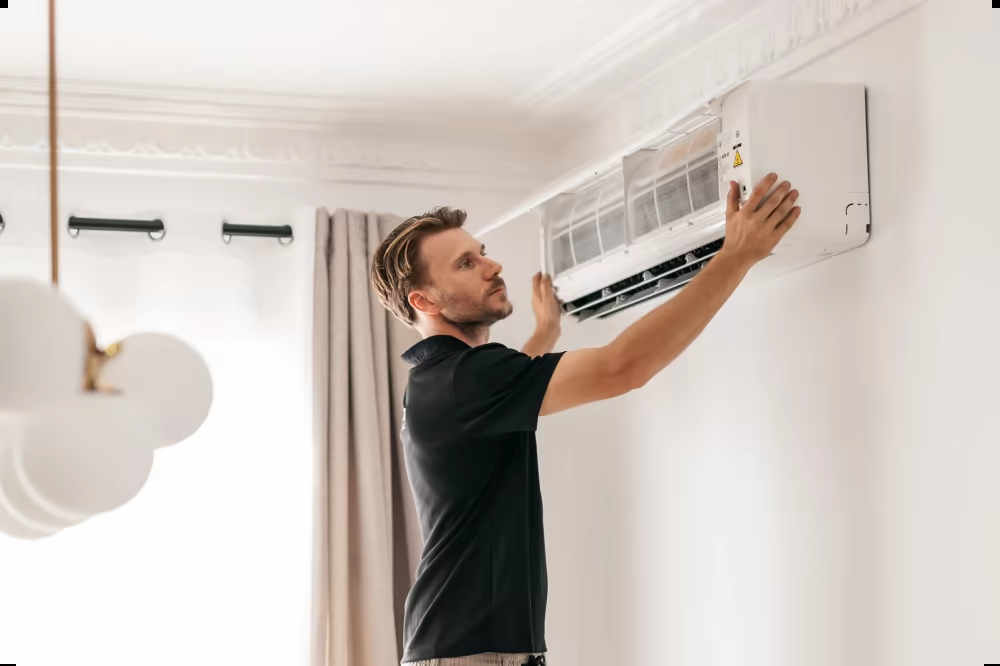
Getting the size right is the biggest decision you make when buying a split system — bigger than brand, bigger than model. Undersize it and the unit runs flat out on a 35°C Brisbane afternoon and never quite gets there. Oversize it and it blasts cold, hits the setpoint, shuts down, then restarts minutes later. That short-cycling costs more to run, strips out very little humidity, and leaves the room feeling cold and clammy rather than comfortable.
This guide gives you the kilowatt range for common Brisbane room sizes, the local factors that push you up a size, and what genuinely reduces your running costs once the unit is in.
Split system size chart by room size
Air conditioners are rated in kilowatts (kW) of cooling capacity. That is not the electricity they draw, which is far lower — a 7kW unit does not use 7kW of power. Measure your room (length × width in metres) and start here:
| Room size | Cooling capacity | Typical room |
|---|---|---|
| Up to 20 m² | 2.0 – 2.6 kW | Small bedroom, study, nursery |
| 20 – 30 m² | 2.5 – 3.5 kW | Main bedroom, small lounge |
| 30 – 45 m² | 3.5 – 5.0 kW | Medium living room, large main bedroom |
| 45 – 60 m² | 5.0 – 7.1 kW | Large living room, small open plan |
| 60 – 80 m² | 7.1 – 8.0 kW | Open-plan kitchen, living and dining |
| 80 m² and above | 8.0 – 9.5 kW, or multi-head / ducted | Very large open plan, whole floor |
A starting point for a standard, reasonably insulated Brisbane room with 2.4m ceilings. The factors below move it.
If your room lands between two rows, or ticks two or more of the factors below, take the higher figure. It is far easier to run a slightly larger inverter unit gently than to ask a small one to do work it cannot do.
Six things that push a Brisbane home up a size
The chart assumes an average room. Brisbane housing stock often is not. Each of these means stepping up:
- ✓West or north-facing glass. A wall of afternoon western sun can add as much heat load as another room. This is the most common reason a unit that was correctly sized on paper underperforms in practice.
- ✓High, raked or cathedral ceilings. The chart assumes 2.4m. A raked ceiling can add half again to the volume of air being cooled, and the cool air settles low while heat pools above it.
- ✓Little or no ceiling insulation. Common in older Queenslanders and post-war homes across Brisbane’s east. A hot roof cavity keeps radiating heat down well after the sun has gone.
- ✓Upstairs rooms. Heat rises, and a second storey under a dark roof runs several degrees hotter than the same room downstairs.
- ✓Open plan with no doors. If the space flows into a hallway, stairwell or kitchen, you are cooling all of it whether you intended to or not.
- ✓Kitchens. An oven, cooktop and fridge all dump heat into the room, so a kitchen-dining space needs more capacity than its floor area suggests.
Sizing is not guessing
A proper sizing takes room dimensions, ceiling height, glazing, orientation, insulation and how you actually use the space. We do that as part of the free quote — on site, not over the phone — so the unit you end up with is the one the room needs.
Multi-head, or one unit per room?
If you are cooling three or four rooms, you have a choice: separate split systems, one multi-head system running several indoor heads off a single outdoor unit, or ducted.
- ✓Separate splits are the simplest option. Each room controls itself, and if one unit fails the others keep running. The trade-off is an outdoor unit for each one.
- ✓Multi-head runs several indoor heads off a single outdoor unit — tidier outside, and useful where external wall space is limited or a body corporate restricts unit placement. All heads share one compressor, so they need to run in the same mode.
- ✓Ducted suits whole-home cooling with zoning and hides everything in the roof space. It is a bigger install and a bigger decision — see our ducted air conditioning page.
How to cut your air conditioning running costs this summer
Once the unit is sized and installed properly, most of what lands on your summer bill comes down to how you run it. These are the levers that actually matter, roughly in order of impact.
1. Set a comfortable temperature, not a cold one
Every degree lower is more work for the compressor, and the work climbs faster than the number suggests. Somewhere in the mid-20s cools a Brisbane home comfortably. Setting it to 18°C does not cool the room any faster — an inverter unit already runs at full capacity until it reaches the setpoint — it just keeps the compressor working long past the point you were comfortable.
2. Clean the filters, properly and often
A blocked filter chokes airflow, so the unit runs longer to shift the same heat. The filters slide out of the indoor head in seconds — rinse them in the laundry sink, dry them, put them back. Monthly through summer is not overkill. Past the filters, the coils and barrel fan collect dust and mould that a rinse will not reach, and that is where a professional air conditioning clean earns its keep in restored airflow and better air quality.
3. Give the outdoor unit air and shade
The outdoor unit dumps your room’s heat outside. Boxed in behind a fence, buried in shrubs, or sitting in full western sun, it re-breathes its own hot air and the whole system works harder for less. Keep clear space around it, keep the fins free of leaves and grass clippings, and shade it where you can without blocking airflow.
4. Shut doors and cool only what you use
A split system is sized for one space. Leave the hallway and bedroom doors open and it is quietly trying to cool the whole house through a doorway. Close the room off and it reaches temperature sooner, then spends the rest of the day ticking over instead of straining.
5. Stop the heat before it gets inside
- ✓External blinds, awnings or shade over west-facing windows beat any internal curtain, because they stop the heat outside the glass.
- ✓Heavy or blockout curtains, closed before the afternoon sun hits, are the cheap version of the same idea.
- ✓Seal the obvious draughts — gaps under external doors and unsealed exhaust fans leak conditioned air all day.
- ✓Ceiling fans do not cool air, but moving air feels cooler on skin, so running one alongside the air conditioner lets you sit a degree or two higher for the same comfort.
6. Use the timer and get ahead of the heat
Cooling a room that has already reached 34°C takes far more energy than holding one that never got there. On a forecast scorcher, start it before the worst of the afternoon rather than after. A timer that shuts it down overnight, or a sleep mode that lets the setpoint drift up as the night cools, saves hours of unnecessary running.
7. Buy an inverter, and compare star ratings
Every quality split system sold today is an inverter model — it varies compressor speed instead of switching hard on and off, so it holds temperature on far less power than an old fixed-speed unit. If you are replacing something ten or fifteen years old, that difference is the most noticeable part of the upgrade. Beyond that, compare the energy rating labels on units of the same capacity before you choose.
The unit is only half the job
A split system runs on its own dedicated circuit. Older Brisbane switchboards often lack the capacity or the safety switch protection to take one, which is why an air conditioning quote sometimes turns into a switchboard conversation. Because we are electricians first, we handle the unit, the circuit and any board work in one visit — see switchboard upgrades.
Book before the first heatwave
Brisbane installers book out fast once the temperature turns, and the wait stretches from days to weeks right when you want the unit working. Spring is the quiet window: better availability, and the system is in and tested before summer rather than partway through it. Our current split system offers start from $1,790 supplied and installed.
Not sure what size you need? We’ll size it on site, free.